A Complete Guide for Internationally Educated Nurses
Canada continues to experience a strong demand for qualified nurses across its provinces and territories. An aging population, increasing healthcare needs, and workforce shortages have created numerous opportunities for internationally educated nurses who want to build rewarding careers in Canada.
If you are a registered nurse or nursing graduate from another country, Canada offers a pathway to both professional growth and a high quality of life. However, becoming a nurse in Canada involves meeting licensing requirements, having your qualifications assessed, and choosing the right immigration pathway.
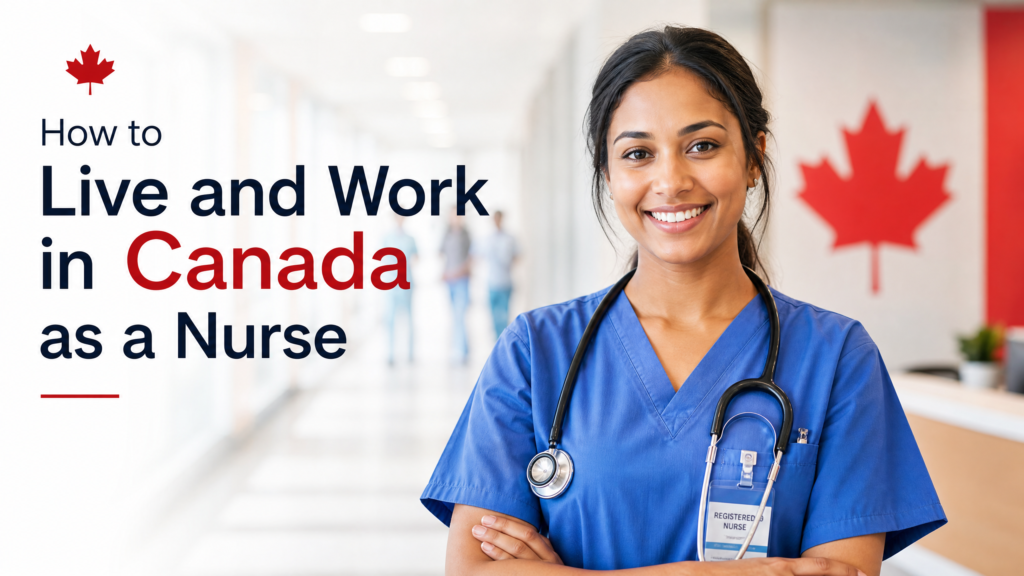
This guide explains how to live and work in Canada as a nurse and what internationally educated nurses should know before beginning the process.
Why Canada Needs More Nurses
Nurses play a vital role in Canada’s healthcare system.
Growing demand has been driven by several factors, including:
- An aging population
- Increased demand for healthcare services
- Retirement of experienced nurses
- Population growth
- Expansion of healthcare facilities
Many provinces continue to recruit qualified nurses to strengthen their healthcare workforce.
Who Can Apply?
Internationally educated nurses from many countries may be eligible to pursue nursing careers in Canada.
This includes:
- Registered Nurses (RNs)
- Registered Psychiatric Nurses (RPNs), where applicable
- Licensed Practical Nurses (LPNs)
- Nursing graduates with recognized qualifications
Eligibility depends on education, work experience, licensing requirements, language proficiency, and immigration eligibility.
Immigration Pathways for Nurses
Canada offers several immigration pathways that may be suitable for nurses.
Common options include:
- Express Entry
- Provincial Nominee Programs (PNPs)
- Employer-supported immigration pathways
- Rural and community-focused immigration programs
The most appropriate pathway depends on each applicant’s qualifications and career goals.
Credential Assessment
Before practising as a nurse, internationally educated applicants generally need to have their nursing education and professional qualifications assessed.
This assessment helps determine whether an applicant’s education is comparable to Canadian standards.
Applicants should ensure that all supporting documents are accurate, complete, and submitted according to the relevant requirements.
Nursing Registration in Canada
Completing a nursing degree outside Canada does not automatically allow someone to practise as a nurse in the country.
Each province and territory has its own nursing regulatory body responsible for licensing and registration.
Depending on the province, applicants may need to complete requirements such as:
- Credential verification
- Professional assessments
- Registration examinations
- Language proficiency requirements
- Good standing verification
Requirements differ across provinces and territories.
Language Requirements
Effective communication is essential in nursing.
Applicants may be required to demonstrate proficiency in English or French through approved language tests.
Strong communication skills support:
- Safe patient care
- Collaboration with healthcare teams
- Accurate documentation
- Professional communication
Meeting language requirements is often an important part of both licensing and immigration processes.
Employment Opportunities
After becoming licensed, nurses may work in a variety of healthcare settings.
These include:
- Hospitals
- Community health centres
- Long-term care facilities
- Rehabilitation centres
- Public health organizations
- Private healthcare providers
Employment opportunities vary depending on province, specialty, and local workforce needs.
Benefits of Working as a Nurse in Canada
Many internationally educated nurses choose Canada because it offers:
- Competitive salaries
- Career advancement opportunities
- Modern healthcare facilities
- Continuing professional education
- Diverse work environments
- High quality of life
Canada also provides opportunities to specialize in different areas of nursing throughout a professional career.
Challenges Internationally Educated Nurses May Face
Moving to a new healthcare system can present challenges.
These may include:
- Meeting licensing requirements
- Credential recognition
- Adapting to Canadian healthcare practices
- Provincial differences in registration processes
- Building professional experience in Canada
Proper preparation can help applicants manage these challenges more effectively.
Tips for Preparing Your Journey
If you plan to work as a nurse in Canada, consider the following steps:
- Research the nursing regulator in your intended province.
- Organize your educational and employment documents.
- Strengthen your English or French language skills if needed.
- Explore immigration pathways that match your qualifications.
- Stay informed about changes to immigration and licensing requirements.
Beginning the process early allows more time to complete each stage successfully.
Why Professional Guidance Matters
Immigrating and becoming licensed as a nurse involves multiple organizations and procedures.
Professional guidance can help applicants:
- Understand available immigration options
- Prepare accurate documentation
- Navigate application requirements
- Stay informed about current policies
Receiving reliable advice can make the process more manageable.
Final Thoughts
Choosing to live and work in Canada as a nurse offers internationally educated nurses the opportunity to build rewarding careers while contributing to one of the world’s most respected healthcare systems. Although the journey requires careful planning and preparation, understanding the licensing and immigration processes can help you move forward with confidence.
By researching your options, preparing your documents, and staying informed about current requirements, you can take important steps toward achieving your goal of becoming a nurse in Canada.
Need Help with Your Canadian Immigration Journey?
Worldbridge Immigration helps skilled professionals explore Canadian immigration pathways, prepare strong applications, and stay informed about the latest immigration developments.
Whether you are a nurse, physician, skilled worker, or international graduate, our team is ready to support your journey to Canada.