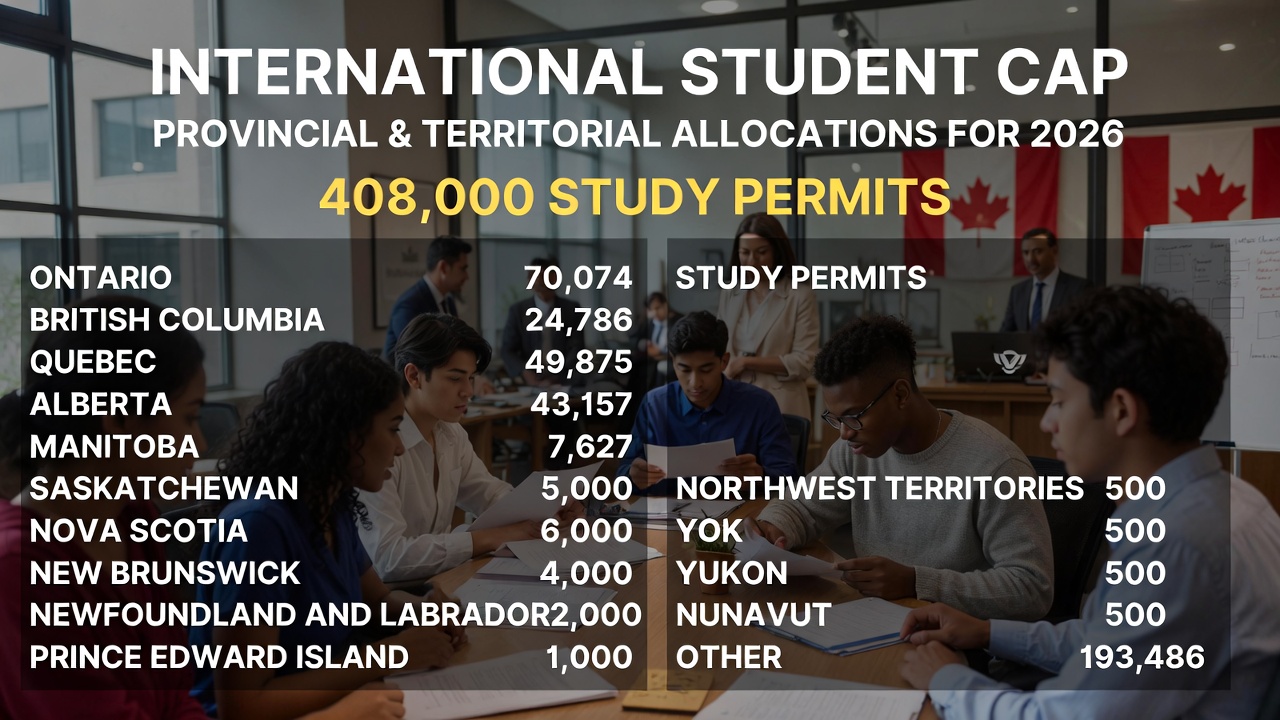

On November 25, 2025, Immigration, Refugees and Citizenship Canada (IRCC) unveiled the provincial and territorial allocations under the international student cap for 2026, marking a pivotal step in managing study permit volumes. The cap limits new study permit applications to 155,000—down 43% from 2025’s 437,000—while total permits (including extensions) are set at up to 408,000. This represents a 7% decrease from 2025 and 16% from 2024, aiming to promote fairness, reduce system strain, and align with housing and labor capacities.
At Worldbridge, we’re analyzing these changes to help students from high-demand countries like India, Nigeria, and the Philippines secure spots for May and September 2026 intakes. With caps tightening, early preparation is essential—here’s the breakdown.
Provincial and Territorial Allocations: Equity and Population-Based Distribution
Allocations for the 155,000 new study permits are distributed based on provincial size, Designated Learning Institution (DLI) capacity, and historical approvals, ensuring smaller regions aren’t overlooked. Key figures:
- Ontario: Receives the largest share at approximately 81,000—reflecting its population and DLI density, but still a cut from prior years.
- Quebec: Around 32,000, emphasizing Francophone programs and regional balance.
- British Columbia: About 18,000, focusing on tech and healthcare sectors amid housing concerns.
- Alberta: Roughly 12,000, prioritizing energy and trades.
- Other Provinces/Territories: Smaller allotments, e.g., Manitoba (8,000), Nova Scotia (6,000), and Newfoundland and Labrador (2,000), with territories like Yukon and Nunavut getting minimal shares to support local needs.
Provinces must issue Provincial Attestation Letters (PALs) or Territorial Attestation Letters (TALs) for most applications, ensuring distribution aligns with capacity. This creates a more level playing field—students from non-SDS countries now compete equally, without expedited advantages.
Implications for International Students
- Fewer Spots Overall: With only 155,000 new permits, competition intensifies—approval rates could drop below 2025’s 38% if volumes surge. Prioritize DLIs in under-capped provinces like Manitoba for better odds.
- Extensions Unaffected: The 253,000 extension spots provide breathing room for current students on PGWPs or mid-program.
- Equity Boost: Ends favoritism toward former SDS nations, but stricter Genuine Temporary Entrant (GTE) checks may raise refusals for all.
- Processing Times: Expect 8-12 weeks standard—apply 4-6 months early to avoid delays from PAL/TAL requirements.
This aligns with the Levels Plan’s goal of capping temporary residents at 5% of the population by 2027, easing pressures while maintaining economic contributions from graduates.
How to Navigate the Changes
- Choose Strategically: Target DLIs in provinces with higher allocations and strong PR pathways (e.g., Ontario’s OINP International Student Stream).
- Prepare Documentation: Prove funds (CAD 20,635+), ties to home, and program fit—common refusal pitfalls.
- Seek Guidance: Avoid backlogs (1M+ apps pending); our RCICs at Worldbridge offer free PAL strategies and loan options for studies.
The cap reshapes access but keeps Canada welcoming for genuine students. Secure your future—contact Worldbridge for assessment. Your 2026 journey starts now.
Let Worldbridge Immigration Services be your guide to a successful future in Canada
Contact us:
Website: www.theworldbridge.ca
Email: info@theworldbridge.ca
Phone/WhatsApp: +1-416-727-7766
Social media: @worldbridgeHQ