Common Pitfalls and How to Avoid Them
Arriving in Canada as an international student is an exciting milestone. After months of preparing applications, securing admission, obtaining a study permit, and planning travel arrangements, students finally begin a new chapter of their lives.
However, the first few months in Canada can be challenging. Many students face unexpected situations that affect their finances, academics, and overall experience. While mistakes are a natural part of learning, being aware of common pitfalls can make the transition smoother.
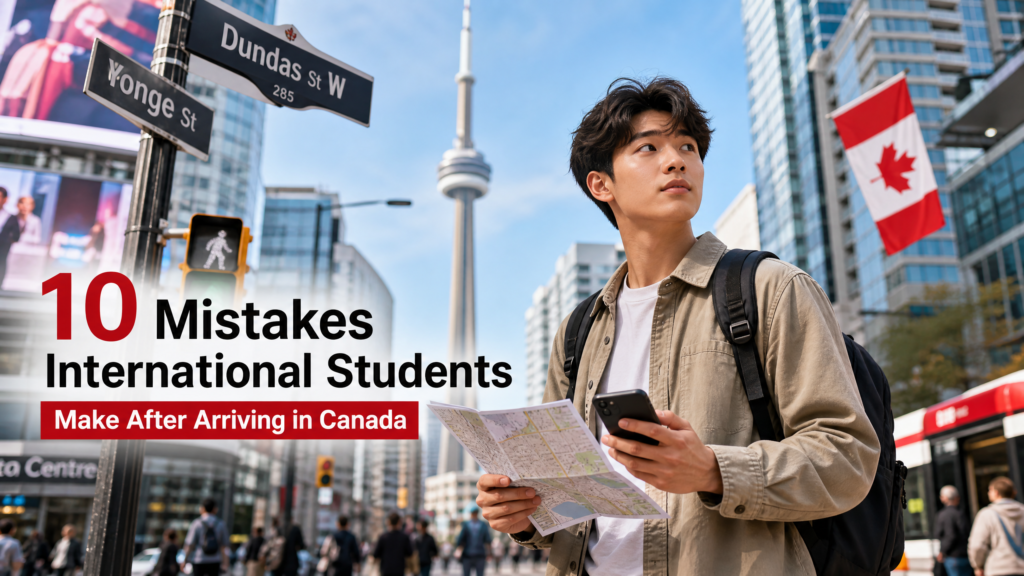
Here are ten common mistakes international students make after arriving in Canada and how to avoid them.
1. Not Understanding Study Permit Conditions
Many students assume that receiving a study permit is the final step in the immigration process.
In reality, study permits often come with specific conditions that students are expected to follow.
Failing to understand these conditions can create complications later, particularly when applying for future immigration programs or work opportunities.
Students should carefully review their study permit and remain informed about their responsibilities.
2. Delaying the Search for Accommodation
Finding suitable housing can be more difficult than many students expect.
Those who wait too long may face:
- Limited housing options
- Higher rental costs
- Long commuting times
- Increased competition from other students
Starting the housing search early can help students secure accommodation that fits their needs and budget.
3. Ignoring the Importance of Credit History
Many newcomers arrive from countries where credit systems operate differently.
As a result, they often underestimate the importance of building credit in Canada.
A strong credit history can become valuable when:
- Renting an apartment
- Applying for financial products
- Financing a vehicle
- Managing future financial goals
Building positive financial habits early can be beneficial in the long run.
4. Overspending During the First Few Months
The excitement of living in a new country sometimes leads students to spend more than planned.
Common expenses include:
- Furniture
- Electronics
- Dining out
- Entertainment
- Transportation
Creating a realistic budget can help students manage their finances more effectively.
5. Waiting Too Long to Look for Part-Time Work
Some students postpone their job search because they want to settle in first.
While adjusting to a new environment is important, delaying too long can reduce opportunities.
Part-time employment may help students:
- Gain experience
- Build professional networks
- Develop workplace skills
- Support living expenses
Starting the search early often produces better results.
6. Not Understanding Healthcare Coverage
Healthcare systems vary significantly around the world.
Many international students mistakenly assume that all medical services are automatically covered.
Students should understand:
- Their health insurance coverage
- Available healthcare services
- Emergency procedures
- Coverage limitations
Knowing how healthcare works can prevent unexpected expenses and stress.
7. Forgetting Important Document Expiry Dates
One of the most common mistakes students make is losing track of important deadlines.
Documents may include:
- Passports
- Study permits
- Visas
- Insurance documents
Keeping a calendar of important dates can help students stay organized and avoid last-minute problems.
8. Failing to Build a Professional Network
Many students focus entirely on academics and overlook networking opportunities.
Building professional relationships can help students:
- Learn about job opportunities
- Access mentorship
- Gain career advice
- Expand professional connections
Networking can play an important role in future career development.
9. Neglecting Academic Responsibilities
Adjusting to a new country often comes with distractions.
Some students struggle to balance:
- Work commitments
- Social activities
- Travel plans
- Academic requirements
Maintaining strong academic performance should remain a priority throughout the study period.
10. Not Planning for Life After Graduation
Many students focus exclusively on completing their program and postpone thinking about what comes next.
However, early planning can help students better understand:
- Career opportunities
- Further education options
- Immigration pathways
- Professional development goals
Preparing ahead often leads to smoother transitions after graduation.
How to Set Yourself Up for Success
Students can improve their experience in Canada by:
- Staying organized
- Managing finances carefully
- Monitoring important documents
- Building professional connections
- Prioritizing academic success
- Planning for the future
Small steps taken early can make a significant difference later.
Final Thoughts
Moving to Canada as an international student is both exciting and challenging. While mistakes are inevitable, understanding the most common pitfalls can help students avoid unnecessary difficulties and make the most of their educational journey.
By staying informed, managing responsibilities carefully, and planning ahead, international students can build a strong foundation for academic success and future opportunities in Canada.
Need Help Planning Your Canadian Journey?
At Worldbridge Immigration, we help students:
- Understand study permit requirements
- Prepare for life in Canada
- Navigate settlement challenges
- Explore long-term immigration pathways
Contact Worldbridge Immigration today to get started.