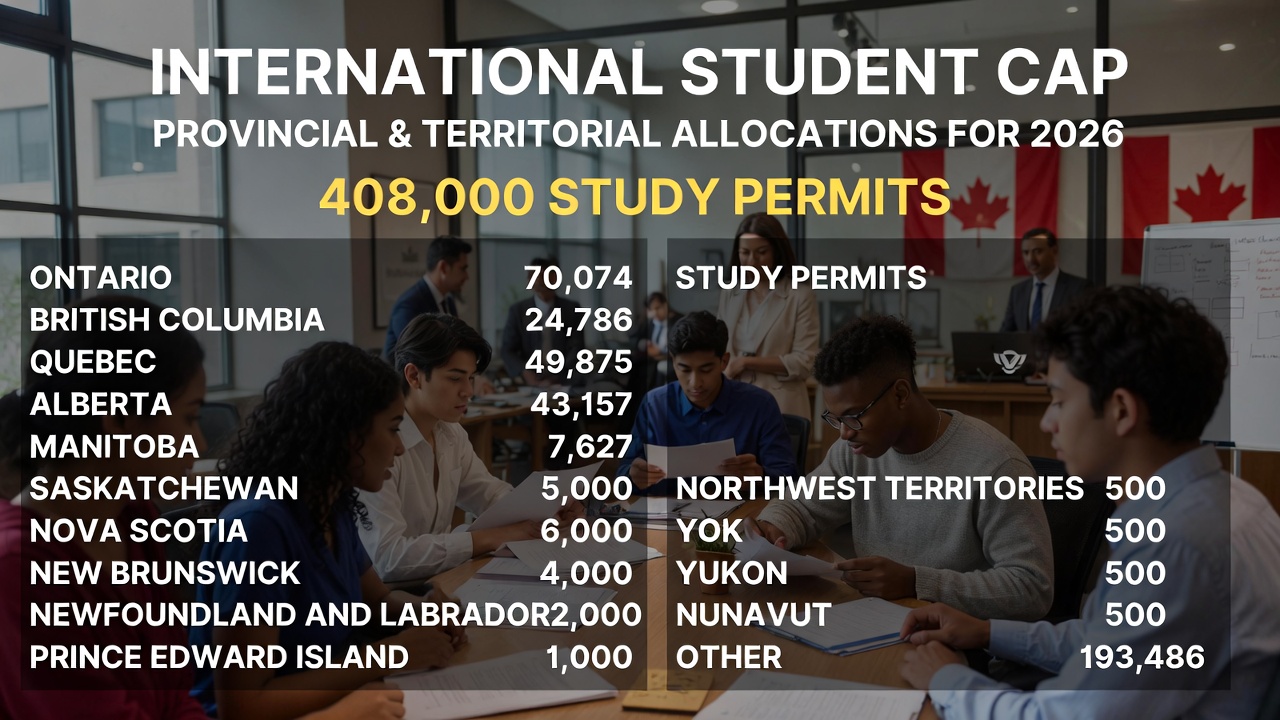

The 2026 study permit cap of 155,000 new international student arrivals has sparked widespread concern among prospective applicants, especially with September 2026 intakes looming. On November 25, 2025, Immigration, Refugees and Citizenship Canada (IRCC) released provincial allocations under this cap, confirming a total of up to 408,000 study permits issued including 253,000 extensions for current students. This represents a 43% cut in new permits from 2025’s target, part of a broader strategy to reduce temporary residents to under 5% of Canada’s population by 2027.
At Worldbridge, we’re fielding this question daily: “With only 155,000 spots, will I still get accepted for September 2026?” The short answer is yes, it’s still very possible but it requires strategic planning, as acceptance rates for new applications have dipped to around 30-38% in 2025 due to high volumes and stricter scrutiny. With the right DLI, province, and preparation, your chances remain strong. Let’s break it down.
Understanding the 155,000 Cap: It’s Not as Dire as It Sounds
The 155,000 figure applies specifically to new study permit holders requiring a Provincial Attestation Letter (PAL) or Territorial Attestation Letter (TAL) typically undergraduate and college students. IRCC expects to process up to 309,670 such applications, accounting for refusals (projected at 50%+ based on 2025 trends). This means the system is designed to approve about 180,000 PAL/TAL-required permits overall, but the cap ensures controlled growth.
Key exemptions ease the pressure:
- Master’s and Doctoral Students at Public DLIs: Fully exempt from the cap and PAL/TAL starting January 1, 2026 aim for these if eligible, as they face no quota limits.
- Extensions for Current Students: 253,000 spots protect those already in Canada, allowing seamless transitions to PGWPs.
- Other Exemptions: K-12 students, certain government priority groups, and vulnerable cohorts (e.g., refugees).
Provincial shares favor larger areas but leave room in underserved regions:
- Ontario: ~81,000 (largest, but highly competitive).
- Quebec: ~32,000 (strong for Francophone programs).
- British Columbia: ~18,000 (tech-focused DLIs).
- Alberta: ~12,000 (energy/trades emphasis).
- Smaller provinces like Manitoba (~8,000) or Nova Scotia (~6,000) offer higher acceptance odds due to lower demand.
For September 2026, DLIs will distribute PALs based on these allocations—early applicants (deadlines often December 2025-January 2026) have the best shot.
Your Chances: Realistic with the Right Strategy
Approval isn’t a lottery; it’s about fit and preparation. In 2025, rates hovered at 38% nationally, but strong profiles (clear intent, solid funds, home ties) succeeded at 70-90%. With 2026’s cap, expect similar or slightly lower rates, but exemptions and regional flexibility create opportunities:
- High-Chance Profiles: Master’s/PhD at public DLIs (no cap), or undergrads in under-allocated provinces like Saskatchewan (approval ~45-50%).
- Risk Factors: Oversubscribed Toronto/Vancouver programs or incomplete apps (e.g., missing GTE evidence) could push refusals to 50-60%.
- Timeline Impact: September applicants submitting by March-April 2026 align with post-cap stability processing at 8-12 weeks.
Bottom line: Yes, you’ll likely get accepted if you target exempt programs, strategic provinces, and submit flawlessly. Our clients applying now for 2026 are securing PALs at 95% rates.
Steps to Maximize Your Acceptance Odds
- Choose Wisely: Opt for master’s/doctoral at public DLIs (e.g., University of Toronto, UBC) or regional undergrads (e.g., University of Manitoba). Avoid saturated spots.
- Secure PAL/TAL Early: Contact your DLI post-acceptance—deadlines tighten with quotas.
- Prove Genuine Intent: Strong home ties (job/family proof), funds (CAD 20,635+ living costs), and program relevance combat refusals.
- Apply Ahead: Aim for 4-6 months pre-start monitor IRCC’s tool for real-time volumes.
- Leverage Support: Get a pre-audit to avoid pitfalls like the 30% drop in approvals from weak docs.
The cap reshapes access but doesn’t close it Canada still needs 155,000 new talents yearly for innovation and growth.
Let Worldbridge Immigration Services be your guide to a successful future in Canada
Contact us:
Website: www.theworldbridge.ca
Email: info@theworldbridge.ca
Phone/WhatsApp: +1-416-727-7766
Social media: @worldbridgeHQ